These plants usually grow in small sizes but may also be sized besah one can even reach up to 12 meters high. continuous evergreen, flowering and fruiting throughout the year horizontal branches, hanging on the end. forming a leafy shade. Smooth-haired twigs mixed with glandular hairs as well as leaves. The leaves of this plant has a pinnate pertulangan system, leaves no jagged edges while the symmetrical and the flowers contain 1-3 (-5) florets, located in the armpit is somewhat beside the growth of leaves; long-stemmed; androgynous and berbilangan 5; petals share in, Taju tapered thread form, smooth-haired; crown trimmed flat, circular inverted egg white, thin, bald, lk. 1 cm. Stamens numerous, 10 to more than 100 pieces. Flowers that bloom stand out, to the leaf blades; but after the fruit hangs down, hidden under leaves. Generally only one or two flowers become fruit in each file. fruit to 1.5 cm in diameter shaped like cerry if cooked it will be red and feeling ma cherry juice is very beneficial and has more content when compared with various isotonic solution that is now being circulated in the market. In terms of nutritional content of fruit cherry fruit is not inferior to others such as mango. Mango in vitamin C 30 mg, whereas 80.5 mg cherry fruit, in addition to the calcium content of 124.6 mg cherry fruit, far more than the mango fruit is only 15 mg. In Indonesia cherry fruit is traditionally used to treat gout by eating a cherry sebayak 9 items 3 times a day and is proven to relieve pain caused from gout. Cherry decoction of the leaves also have anti-inflammatory properties and reduce the heat and even the content of cherry leaf decoction was efficacious as a killer microbe can be dangerous and may be used as an anti-septic. 2Kandungan cherry-cherry fruit per 100 grams is as follows: Water (77.8 grams), Protein (0.384 grams), fat (1.56 gram), carbohydrate (17.9 grams), fiber (4.6 grams), ash (1.14 g), calcium (124.6 mg), Phosphorus (84mg), Iron (1.18 mg), carotene (0.019 g), Tianin (0.065 g), Ribofalin (0.037 g), Niacin (0.554 g), and Vitamin C content (80.5 mg). Value of energy produced is 380KJ/100 gram. While the cherry leaf has long been used as a medicinal plant traditionally used as a headache remedy and anti-inflammatory by the people of Peru. Here are some of the benefits of the leaves and cherry fruit:
Antiseptic cherry leaf decoction has proved efficacy can kill microbes or as an antiseptic. Cherry leaf decoction is proven to kill bacteria as follows: C. Diptheriae, S. Aureus, P. Vulgaris, S. Epidemidis, and K. Rhizophil. Alleged anti-bacterial activity of leaves of cherry disebabbkan by the content of these compounds such as tannins, flavonoids and saponins have.
Antiinflammatory cherry leaf decoction also have properties to reduce inflammation (inflammatory) and also reduce the heat.
Antitumor cherry leaves are also reported to have anti-tumor effect, wherein the content of flavonoid compounds belonging to this cherry leaves was found to inhibit the growth of cancer cells in vitro / laboratories.
Anti Uric Acid (Uric Acid) In Indonesia cherry fruit has traditionally been used to treat gout by eating a cherry sebayak 9 items 3 times a day. It is proven to relieve pain caused from gout page.
How to Make cherry syrup
The ingredients include ripe cherry fruit, water, white sugar, cinnamon, salt, vanilla, and tools used are buckets, pots, mortar (mortar), filter and bottle for packing. Selected cherry fruit is ripe (red) and then washed thoroughly. Cherry pulp is separated from the skin by means of mashed and boiled with a ratio of 1 part water to 3 parts cherry. (1:3). Cherry and sugar mixed with a ratio of 1:2 along with the vanilla, salt, and cinnamon to taste and should continue to boil stirring. After boiling cherry syrup is filtered to remove the residue. Products processed from cherry does not use any chemicals all natural. Therefore, the processed products are more healthy than existing products on the market in general.
Sources:
http://www.lintasberita.com/, http://www.bloggaul.com/, & http://suaramerdeka.com/ http://ksupointer.com/,


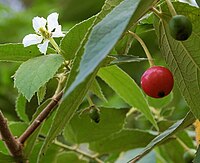 The fruit is often used children to play or eat, leaves and fruit compounds turned out to contain important and efficacious for the drug. Cherry fruit in Sri Lanka is often preserved and made fruit jam hours. The fruit is very popular in Mexico and is generally sold in traditional markets in large numbers. In Southeast Asia, cherry is one of the common roadside tree once found, especially in dry areas. This small tree originally grew wild on the edge of roads, sewers, or even cracks in the middle of the floor wall or fence. Grows rapidly growing as a shade tree. Although now widely used merely as a shade plant, this plant actually has health benefits that are very useful. Cherry fruit is usually liked by children and is a source of food for some secies like flying-fox (fruit bats) and many bird species like the school children once played on this tree they usually look for the ripe fruit delivered foliage. Fruit-eating birds, such as the merbah and bird chilies, frequenting these trees during the day to eat the fruit or its juice is sweet. In the dark, changing various types of fruit bats that come with the same goal. Cherry seeds are not digested by birds and flying-fox, because both groups of animals that also function as seed dispersers.
 Guava plants, including shrubs, so it's not just any kind of plant. The trunk has many branches and the branches are very tough. The outer surface of the red guava tree is brown and smooth. If the red guava bark peeled wooden rod surface will look wet.
